
PMI News
NFPA 2500 Updates, Part 3 Life Safety Rope and Equipment Revisions

LOUI MCCURLEY
This is the third in a four-part series on the NFPA 2500 standard and what its proposed updates mean for technical rescue professionals. If you missed the earlier posts, Part 1 lays out the standard’s structure and terminology changes. Part 2 covers the organizational capability sections, from watermanship tests to tower rescue updates.
Now, it’s time to get specific about gear.
For anyone who might rely on a rope system to pluck a stranded window cleaner from a highrise, rig a raise from a canyon ledge, or maneuver a patient through tower lattice to safety, this section of NFPA 2500 matters. Chapters 24 through 28 detail the expectations for life safety rope and equipment. This update cycle brings changes to labeling, design criteria, performance testing, and more. The goal is to ensure clarity, consistency, and reliability so you can be ready for the moments that count.
These NFPA 2500 proposed revisions are open for public comment until July 28, 2025, so this is your chance to speak into the gear standards that shape our work.
“
The goal is to ensure clarity, consistency, and reliability so you can be ready for the moments that count
”
General Updates Across the Standard
Before we get into Chapters 24–28, here’s a quick review of the broader revisions we’ve already talked about that are happening across NFPA 2500:
– New Title: The name has been tweaked to emphasize that the standard applies to organizations. Individual technician qualifications remain under NFPA 1006.
– Terminology Updates: “Tensile Strength” is replaced by “Minimum Breaking Strength (MBS)” across the board. “Software” becomes “Soft Goods.” These changes reduce confusion and better reflect current industry usage.
– Equipment Standards: Labeling requirements have been cleaned up. Some performance requirements are more specific. Test procedures are more explicit and consistent with real-world gear configurations.
– Editorial Reorganization: Numbering and cross-references have been corrected, helping teams and manufacturers find what they need without second-guessing.
These refinements are designed to help manufacturers and test labs produce products with meaningful certifications to better support your work.
Chapters 24–28: Life Safety Rope and Equipment
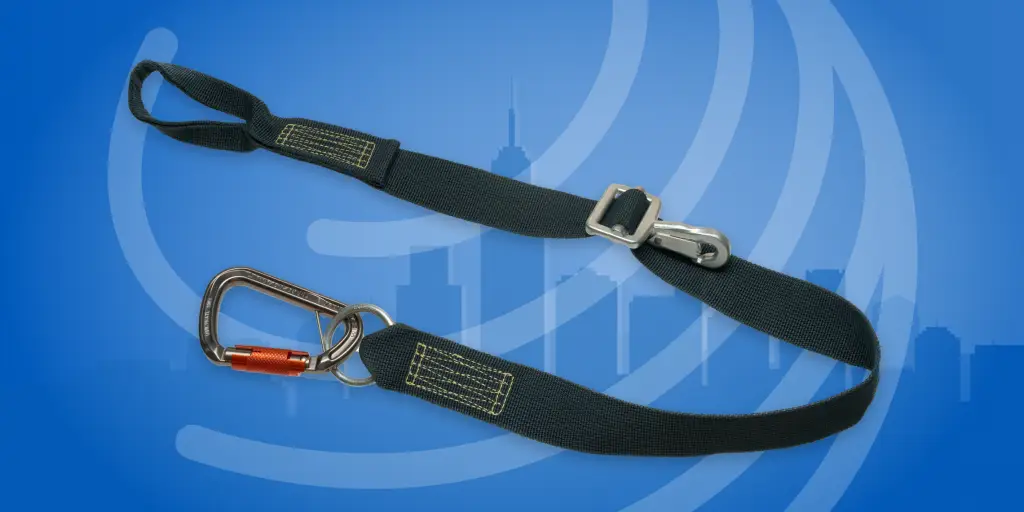
These chapters outline technical requirements for ropes, harnesses, connectors, escape systems, and related gear. Here’s what’s changing:
Chapter 24: Certification Requirements
Most of the updates here are administrative. Document references have been updated, version numbers fixed, and minor errors corrected.
Generally speaking, the certification process for ropes, harnesses, carabiners, and other gear remains consistent. The “G’s”, “T’s” and “E’s” you know and love are fully intact and still applicable to the gear you use. PMI’s NFPA-compliant equipment, from static lines to personal harnesses, already meets these criteria. This chapter keeps that certification framework intact and easier to apply.
Chapter 25: Labeling and Product Information
Labeling is where the standard gets more prescriptive. These changes are aimed at improving clarity and usability so that standard requirements are applied more consistently.
– Carabiners and Snap Links: MBS values are now required for three configurations: major axis, minor axis, and gate open. In the past, only major axis values were labeled, even though all three were tested. This makes it easier to understand what your connector can handle in less-than-ideal orientations.
– Portable Anchors: Devices like tripods and AHDs will no longer display a numerical strength rating. Instead, they’ll just be marked with a “G” (General Use, 36 kN) or “T” (Technical Use, 18 kN), based on how they were tested. Manufacturers will be required to specify the test configuration used to reach the rating. If you’re running load calculations or building system diagrams, this shift means that you might have to use generic numbers rather than rated strengths on the device, and / or rely more on supporting documentation. This approach might also make it more difficult to accommodate dual certifications for both “G” and “T” ratings under different configurations; time will tell how this plays out.
– Pulleys: If a pulley includes a becket, the strength of that becket must be included as part of the labeling. Rope diameter compatibility must also be clearly stated. This makes matching your pulley to your rope and choosing which pulley to use with your PMI Classic 12.5mm as compared with your PMI Extreme Pro 11mm, with greater precision.
– Auxiliary Equipment: While there are still specific test methods for escape devices and kits, the “E” designation for Auxiliary Equipment has been dropped. Auxiliary Equipment is kind of a “catch-all” for equipment not covered by the standard, but there were no standardized test methods tied to this category under the “E” classification, and in practice test labs were reporting that no one had asked for this designation in the past, so it was dropped. There’s also a change to escape systems in that where one load bearing component relies on another to achieve the E rating, those must be listed directly on the label.
These changes support more consistency and precision of information to support on-the-spot decisions during equipment checks and rescue operations.
Chapter 26: Design and Construction
Most updates here affect layout and structure of the document, but a few adjustments are worth noting:
– Harnesses: Language now refers to fastening “around the waist and around the legs,” replacing earlier phrasing that referenced thighs and buttocks. This better reflects the design of current harnesses like the PMI Avatar and how they are worn in the field.
– Ladder and Escape Belts: Design load expectations are now standardized across these belt types at 1.33 kN (300 lbf) and 2.67 kN (600 lbf), depending on application. This brings consistency to a category that often includes crossover gear used in different configurations.
“
These updates reduce ambiguity and tighten up product expectations across the board.
”
Chapter 27: Performance Requirements
This chapter governs how gear must perform under load, abrasion, heat, and other stressors. Key changes include:
– Escape Anchors: Heat resistance testing now applies to all anchor devices, regardless of material. This closes a previous gap where only non-metal anchors had to meet the requirement. If you’re using the Clinch Hook in a PMI Creel Bailout System, it will now be evaluated for heat exposure along with web and rope components.
– Carabiners in Escape Systems: These are addressed under performance testing. Every carabiner included in an escape system will need to meet updated performance standards during certification.
– Fire Escape Systems: Melt performance standards introduced under a Tentative Interim Amendment in the last cycle are now formalized. Fire escape ropes and webbing in a system must meet the same requirements as stand-alone products moving forward.
These updates reduce ambiguity and tighten up product expectations across the board.
Chapter 28: Test Methods
Test procedures have been adjusted to reflect field conditions more accurately and improve consistency:
– Belt and Harness Drop Tests: Instead of using exactly three specimens, the revised method calls for use of “at least three” specimens during tests of each load-bearing attachment point in both head-up and head-down orientations. Whereas previously the test allowed the three harnesses to be re-used for multiple drops, now testers may use fresh specimens for each drop. This allows for more realistic test-to-failure data without unrealistically overstressing a single piece of gear multiple times.
– Escape Harness Drop Tests: Drop distance is now set at 0.5 meters, down from 1 meter, for Escape Harnesses only. Based on preliminary tests, the impact force resulting from even a 0.5-meter drop on a harness of fire-resistant material using the prescribed test method can reach up to 10 kN. This still seems excessive, but the new requirement at least better reflects the way these harnesses are deployed in real use. Class II and III harnesses are still tested at a 1-meter drop.
– Test Load Alignment: Load values across escape ropes, webbing, and belt systems are now harmonized to eliminate discrepancies. This helps you interpret product specs and compare systems more effectively.
“
When you clip in, lower out, or haul up, you’re trusting the gear and the standards behind it. There’s no room for guesswork.
”
Why It Matters
These revisions aren’t just an exercise in paperwork. They shape how your gear is tested, labeled, and deployed in the field. If you pay attention to the details, understanding how your gear is tested will give you better information about what your system can do and where its limits lie.
Gear from PMI already meets these performance demands. Our static and escape ropes are tested internally and by third-party labs and reflect stringent MBS values. Carabiners are marked across all orientations. Belts and harnesses are designed with load standards and drop tests in mind. From technical mountain rescue to high-rise window extrication, your gear needs to do exactly what the label says. These changes help ensure that it does.
More importantly, they reinforce the importance of trust. When you clip in, lower out, or haul up, you’re trusting the gear and the standards behind it. There’s no room for guesswork.
Speak Up Before July 28, 2025
This revision cycle is still open, and the time to comment is now. Visit the NFPA 2500 Standard Development NFPA 2500 Standard Development page to submit your feedback.
Whether you’re a rescue technician, a professional trainer, an administrator/AHJ representative, or some combination of these, your input can help optimize this standard for your specific needs.
PMI Gear, Built for the Standard
At www.pmirope.com, you’ll find NFPA-compliant ropes, harnesses, connectors, and systems that match the intent and the letter of these updates. From the PMI Classic and Extreme Pro lines to the Creel Bailout System and Avatar Harness, our gear is tested, certified, and ready to support your mission.
Coming Next: In Part 4, we’ll wrap up this series with a look at what these changes mean for training, implementation, and the future of rope rescue standards.
Until then, check your gear, review the changes, and make sure your voice is part of the conversation.
Learn more or submit your public comments:
Visit the NFPA 2500 Standard Development page
Explore PMI’s NFPA-certified gear
0 comment